
Albert Einstein (1879–1955) was a theoretical physicist best known for developing the theory of relativity, one of the two pillars of modern physics (alongside quantum mechanics). His famous equation, E = mc², demonstrated the relationship between mass and energy, revolutionizing our understanding of the universe. Born in Germany, Einstein became a Swiss and American citizen, and his groundbreaking contributions earned him the Nobel Prize in Physics in 1921. Beyond his scientific achievements, Einstein was an advocate for civil rights, a promoter of pacifism, and a lover of music, particularly playing the violin. His curiosity and passion for knowledge made him one of the most influential scientists of all time.
On the Electrodynamics of Moving Bodies (1905)
The Foundation of the General Theory of Relativity (1916)
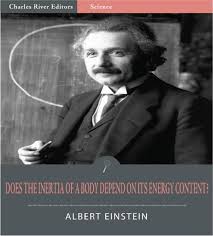
Does the Inertia of a Body Depend Upon Its Energy Content? (1905)
Investigations on the Theory of Brownian Movement (1905)
Einstein discusses how imagination is more crucial than knowledge, as it allows scientists to explore possibilities beyond current understanding and drive innovation.
Einstein shares his views on pacifism, the dangers of nationalism, and the role of science in promoting peace, calling for global cooperation to avoid future conflicts.
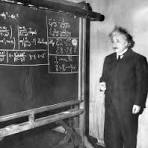
Einstein Teaching
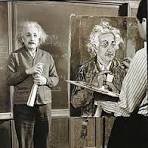
Einstein with a Potrait of himself
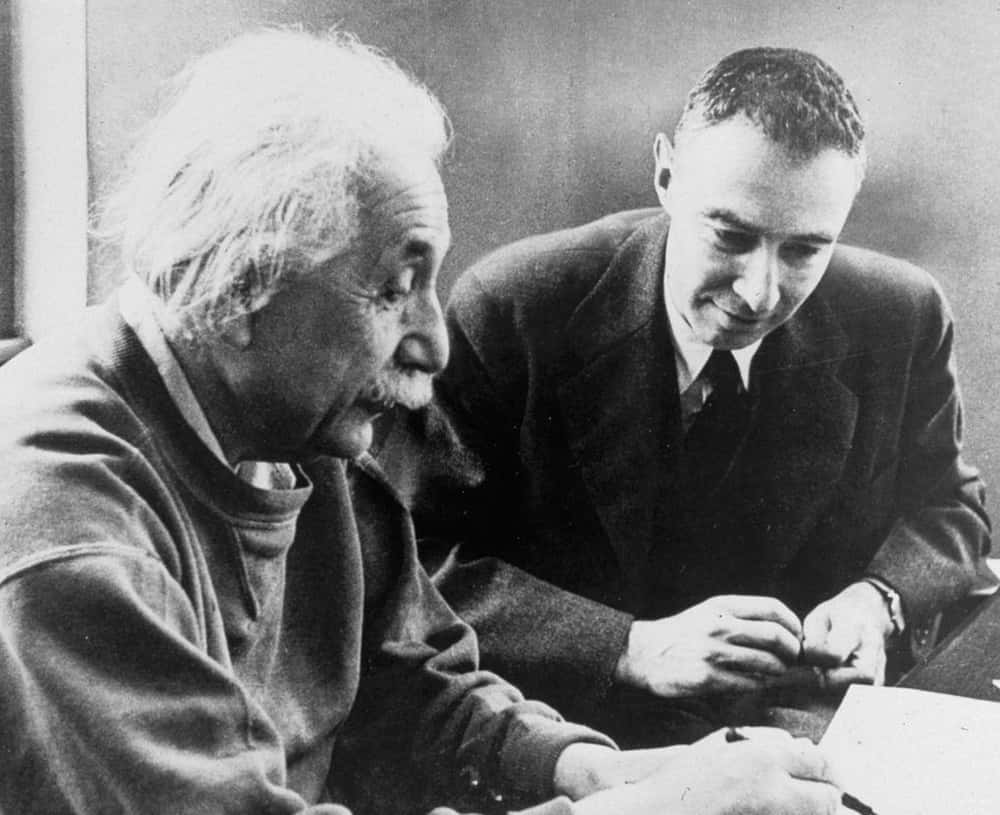
Einstein with Oppenheimer
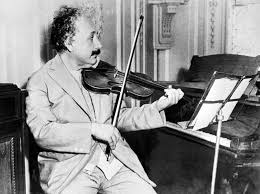
Playing Violin